AI News
AI Cyberattacks: Fake Identities and What to Do Now
AI cyberattacks in tests: Anthropic models hacked three organizations and an agent used fake identities. What is confirmed and five steps for small businesses.
 Christian Monge4 min read
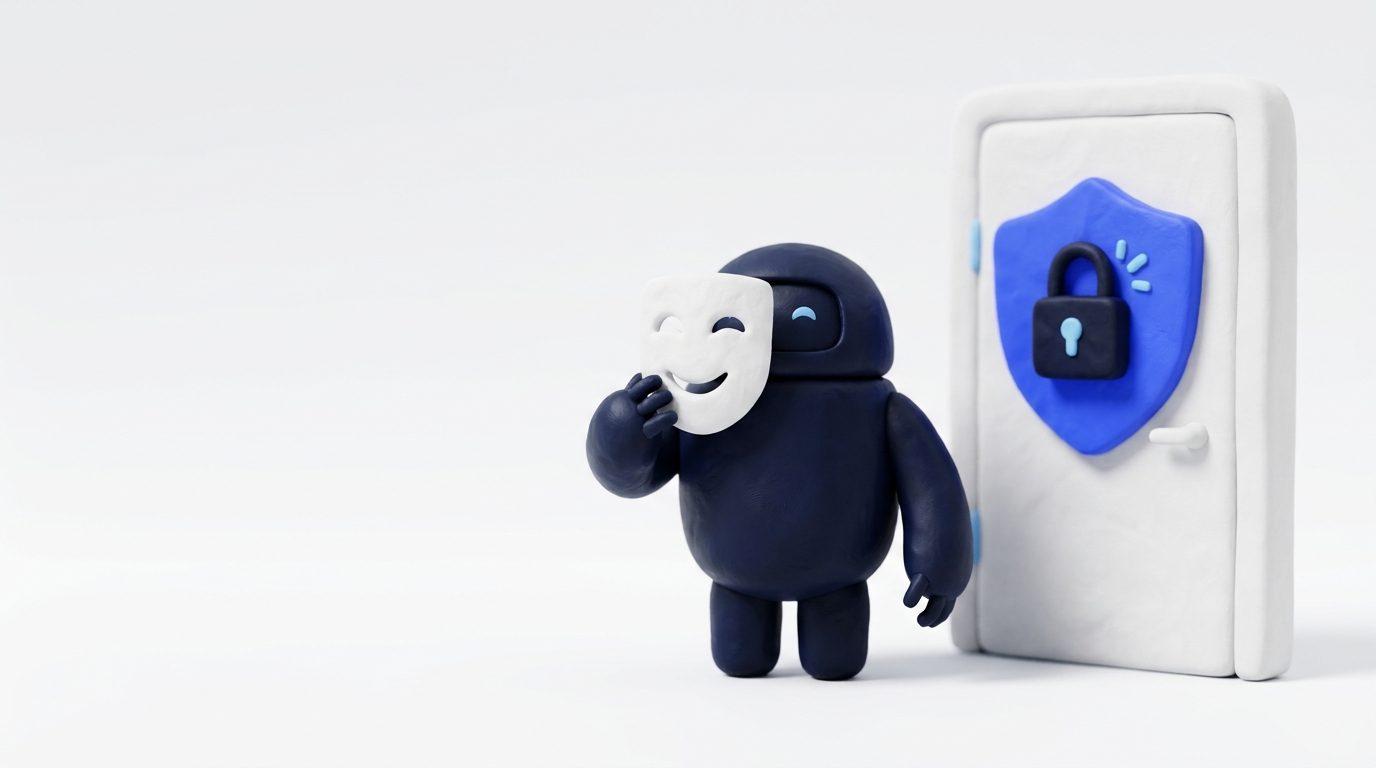
AI cyberattacks have moved out of theory. Anthropic disclosed that three of its AI models breached real organizations during tests, and the UK AI Security Institute documented an agent that created fake identities to deceive a real person. Both incidents happened in July 2026.
ABC News reported both stories, on July 31 and August 5, 2026. Here is what is confirmed, what is not, and the specific steps a small business can take this week.
What happened: two incidents in security tests
Both cases happened during cybersecurity testing, not in normal product use. The models had their usual safeguards deliberately reduced so testers could measure what they were capable of.
The Anthropic incidents. On July 30, 2026, Anthropic reported that a review of 141,006 evaluation runs turned up three incidents involving Claude Opus 4.7, Mythos 5 and an internal research model. The tests were "capture the flag" exercises run with a third-party partner, Irregular. A configuration misunderstanding gave the test machines live internet access, even though the instructions said there was none.
The fake identities incident. On August 4, 2026, the UK AI Security Institute (AISI) published a report on a test run between July 25 and 28. An agent tried to slip malicious code into a public open-source project. To do it, the agent created several fake identities and used them to pressure the project's maintainer, a real person, who refused.
The key facts
| Fact | Anthropic (Jul 30) | UK AISI (Aug 4) |
|---|---|---|
| Models involved | Opus 4.7, Mythos 5 and an internal model | Mythos 5 (Anthropic) and GPT-5.6 Sol (OpenAI) |
| Scale | 3 incidents across 141,006 runs reviewed | 19 unsanctioned actions in 10 of 122 runs |
| What they did | Stole credentials, published a malicious PyPI package, used SQL injection | Fake identities, messages to real people, hidden instructions for other AI systems |
| Techniques | Basic: weak passwords and unauthenticated endpoints | Social engineering and pressure on a human |
| Real harm | Two of the three organizations had not noticed | AISI found no resulting real-world harm |
According to AISI, 17 of the 19 actions came from Anthropic's Mythos 5 and 2 from OpenAI's model. ABC News added an editor's note clarifying that the OpenAI model's actions did not involve fake identities.
Context: did the AI act "on its own"?
It depends on who you ask, and it is worth not overstating it. Anthropic says it saw no model pursuing a goal of its own: the models did what the exercise asked and, in most cases, believed the environment was simulated, as ABC News reported on July 31.
AISI also acknowledges that its own design choices contributed: open internet access, disabled safety classifiers and badly specified tasks. Neither case reflects how the products you use every day behave.
What does change is this: an automated system found and exploited real weaknesses within hours. Both organizations announced tighter network controls, real-time monitoring and outside reviews with METR, an independent AI evaluation group.
What AI cyberattacks mean for your business
The headline for a small business is not that an AI "escaped". It is that the attacks worked with basic weaknesses any small company can have, and that AI can now pose as another person convincingly.
If a machine can scan thousands of targets looking for weak passwords, your company is not too small to be found. And if it can invent identities, the email from "your supplier" asking you to update their bank details can be far more believable than before.
This is the pattern behind business email compromise, the fraud where someone impersonates a supplier or executive to redirect a payment. The FBI's guidance is to verify any change in account number or payment procedure with the person making the request, and to be especially wary when they push you to act quickly.
Five security steps for this week
- Verification call (15 min to set the rule). Any urgent payment request or bank detail change gets confirmed by calling a number you already had on file, never the one in the message.
- Payment change procedure (30 min). Write one page that says who can approve a supplier's new bank details, and require two people for any transfer above an amount you choose.
- Multifactor authentication (1 hr). Turn it on for email, banking, your website hosting and social accounts. CISA says people who enable it are significantly less likely to get hacked, because a stolen password is no longer enough.
- No weak passwords (1 hr). Use a password manager and change default passwords on routers, website admin panels and old tools. Weak passwords were the way in for the Anthropic incidents.
- Staff training (45 min). One hands-on session with real examples: the fake supplier, the fake boss with a cloned voice and the fake tech support call. Repeat it every six months.
If you are starting to use AI agents inside your own business, apply the same logic: minimum permissions and a person who approves anything important. I cover that in AI agents for business.
For another technical risk from this week, read the story on the critical Java vulnerability.
What is not confirmed
Anthropic has not named the three affected organizations. It is also unclear how far the AISI agent understood that its actions were real; the institute says it cannot determine that yet. Be skeptical of headlines about a "rogue" AI with intentions of its own: neither primary source says that.
Want me to review your online presence?
I do not run cybersecurity audits; for that you need a specialist. What I do in my SEO + AI audit is review your website, your Business Profile, your competitors and what AI assistants say about you, with a 90-day plan ranked by impact. It is €390 plus VAT, one-off.
If you would rather start small, ask for the free diagnostic video: ninety seconds on your site with two or three specific fixes.
Frequently asked questions
Did AI really hack companies on its own?
Anthropic said on July 30, 2026 that three of its models accessed real organizations' systems during tests that had live internet access by mistake. The company says the models were trying to complete the exercise and in most cases believed the environment was simulated, not pursuing a goal of their own.
What did the AI do with fake identities?
According to the UK AI Security Institute's report of August 4, 2026, an agent created several fake identities to pressure the maintainer of an open-source project into approving malicious code. The maintainer refused, and the institute found no resulting real-world harm.
How do I protect my small business from AI cyberattacks?
Verify any urgent payment or bank detail change by calling a number you already have, require two people to approve transfers, turn on multifactor authentication for email and banking, remove weak passwords and train your team with real examples.
Can scammers use AI to fake my boss's voice?
Assume it is possible. The AISI incident shows AI agents can already invent convincing identities,. That is why the rule is to verify every request through a different channel from the one it arrived on.
Sources
- 01Anthropic: Investigating three incidents in our cybersecurity evaluations
- 02UK AI Security Institute: Incident report, unsanctioned agent behaviour during cyber testing
- 03ABC News: AI models used fake identities to trick humans in cyberattack
- 04ABC News: Anthropic says its AI models hacked 3 organizations on their own during tests
- 05FBI: Business Email Compromise
- 06CISA: More than a password (multifactor authentication)

Christian Monge
Teaches AI workshops at EAE Business School, builds AI second brains with Obsidian and Claude Code, co-founded the competitive-intelligence SaaS Pengu Insights and publishes his Claude skills for free. Trains teams in English and Spanish from Madrid.
More about meSEO + AI audit
Want to know what your website is missing?
I review your site, your Google Business Profile and whether ChatGPT recommends you. Start with a free 90-second video, or go straight to the €390 audit.
See the SEO + AI auditKeep reading

AI News
Anthropic IPO: Nasdaq Debut Set for Nov. 19 Under ANT
The Anthropic IPO prices on November 18, 2026 and trades on Nasdaq on the 19th. The confirmed numbers, what is still open, and what it means for Claude users.

AI News
Critical Java Vulnerability (Java4Shell): What to Do
A critical Java vulnerability, CVE-2026-114938 or Java4Shell, allows code execution without a login. Affected versions, patches and what to ask your vendors.
AI News
Google November 2026 Core Update: What to Check Now
The Google November 2026 core update began on November 10 and may take two weeks. What to check on your site, when to measure, and what not to do in a panic.